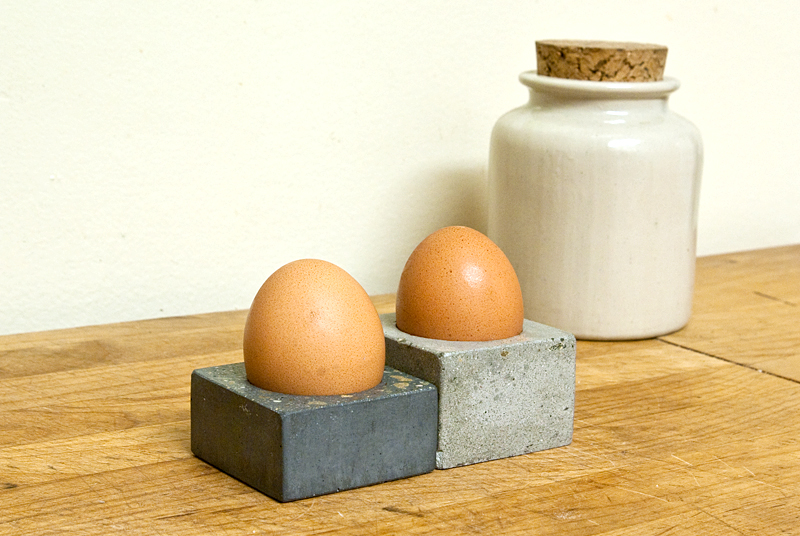
I made these concrete egg holders for the 21pop shop at the FOG art and design fair 2014 in san francisco. In order to produce a lot of the same thing in a short amount of time, I made a few rubber molds and used a concrete mix that sets up very quickly (rapidset). This means the pieces can be removed the next day, instead of waiting 3-4+ days with a different concrete mix.
Rubber bouncy-balls are just about the right size for regular store bought eggs. I took a bunch of quarters to toys-r-us and fed them to the bouncy-ball machine in the entrance. The only problem is that it's a gamble. Half of the balls aren't smooth, and the other half will say "made in china" or "made in vietnam", so you can't use that half unless you want those words cast into the concrete piece. Cut the bouncy balls in half and silicone them to a base board, then build some walls and caulk the form so it's water tight. I used styrofoam for the form walls and spray adhesive to stick them to the base board.
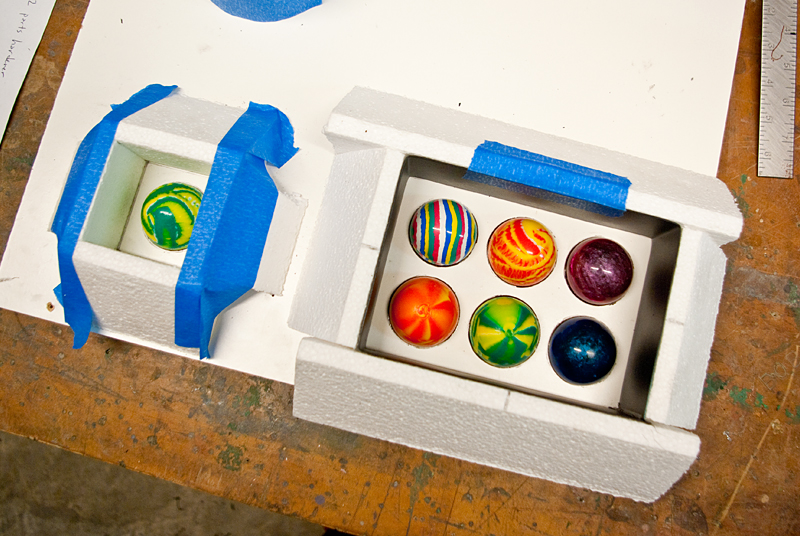
To cast the masters I used a self-leveling thin-set mortar, but plaster or polyurethane rubber or regular concrete will work too.
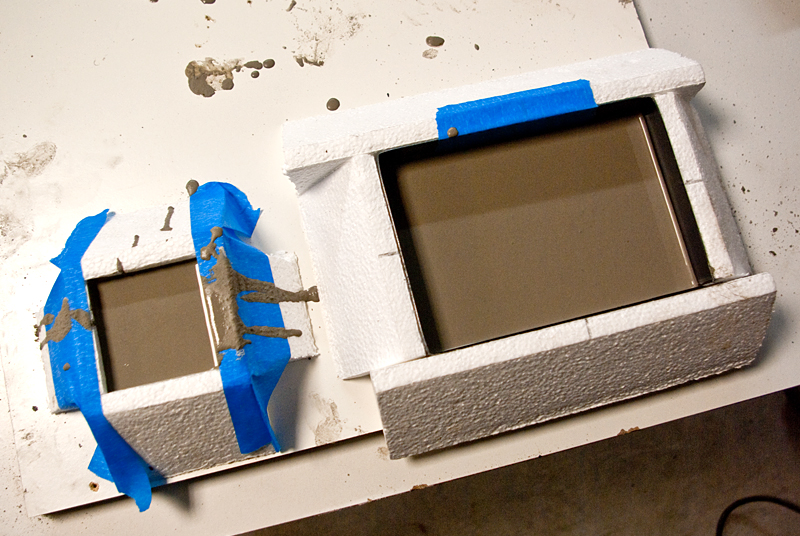
After a day I removed the form walls and got the master to release after sawing the base board so the it could be released from the concrete. This didn't go as easily as planned because each of the knockouts had such a tight grip on the piece.
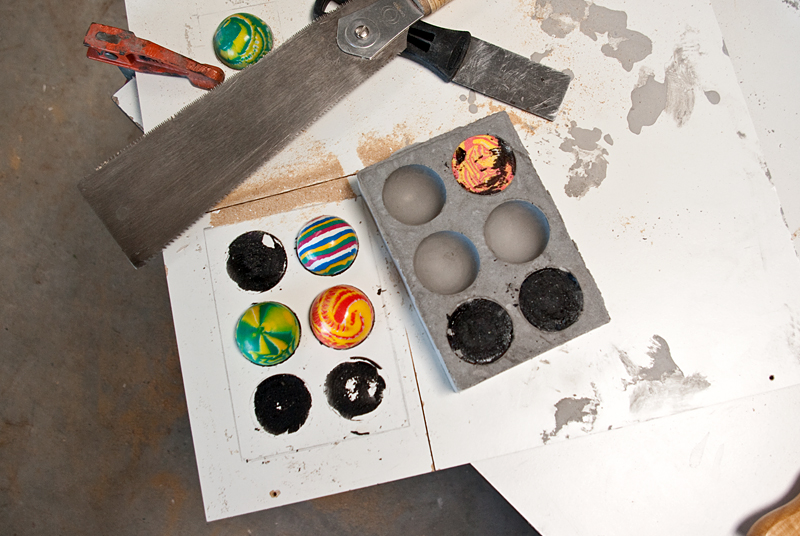
There were a few pinholes that could have been filled, but the master looked pretty good and I was in a hurry, so it was time to cast the rubber mould.
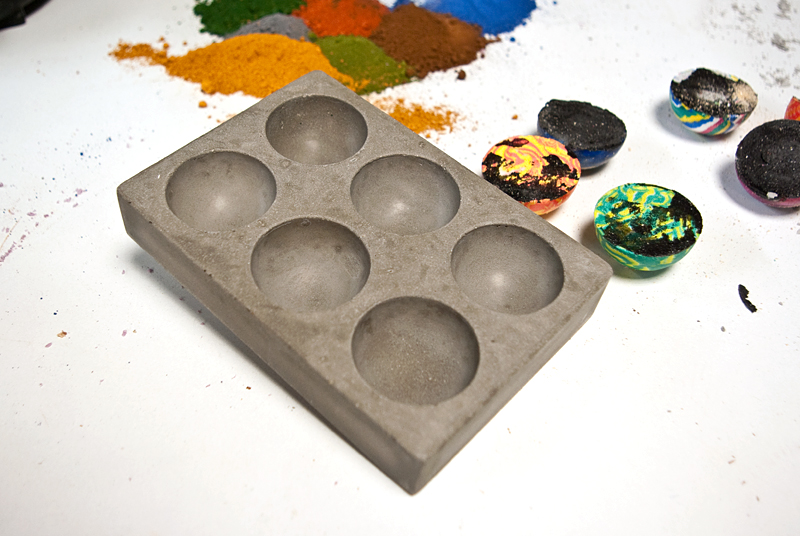
While the concrete is curing, it will be giving off oxygen or something, which will create bubbles in the rubber mould unless the piece is sealed. Similar off-gassing will happen with plaster unless it's given enough time to dry or bake in an oven. Wood should also be sealed, but rubber won't have this problem.
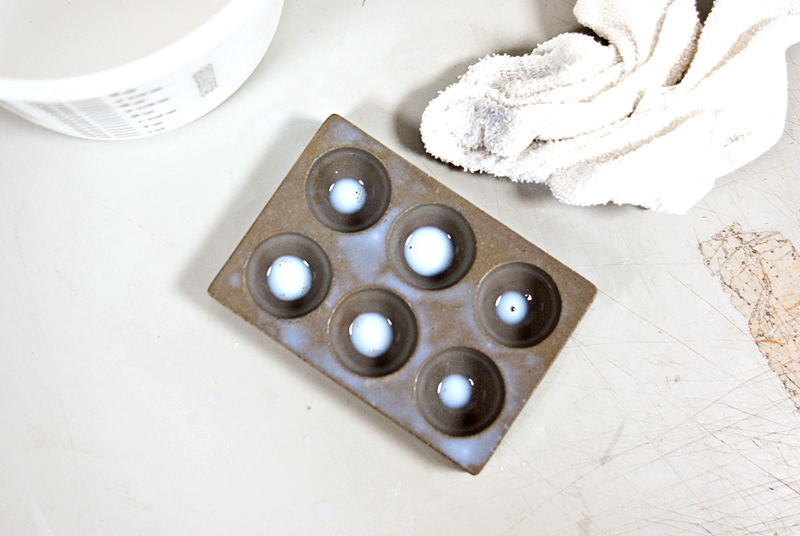
Casting the rubber mould is basically a repeat of the steps above - build a water-tight form around the positive and use silicone to secure the piece to a base board. It's very important that the piece is completely sealed, any air that can escape from under the piece will probably travel up the side wall and get stuck against the piece while the rubber cures.

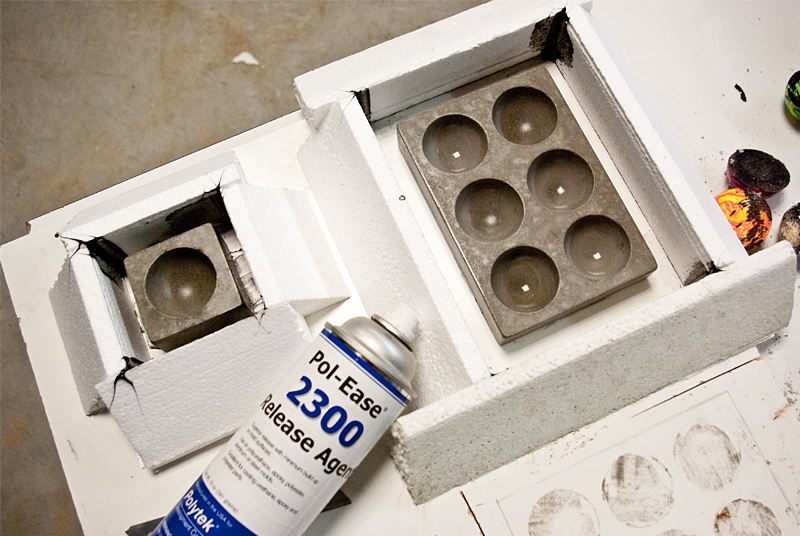
Before casting the rubber, clean out the form with denatured alcohol and use a mold release.
Do some volume calculations and figure out how much rubber to use. This is a two part polyurethane rubber, shore harness of 60, which is hard enough to hold it's shape but can still be pried apart to demold the piece.
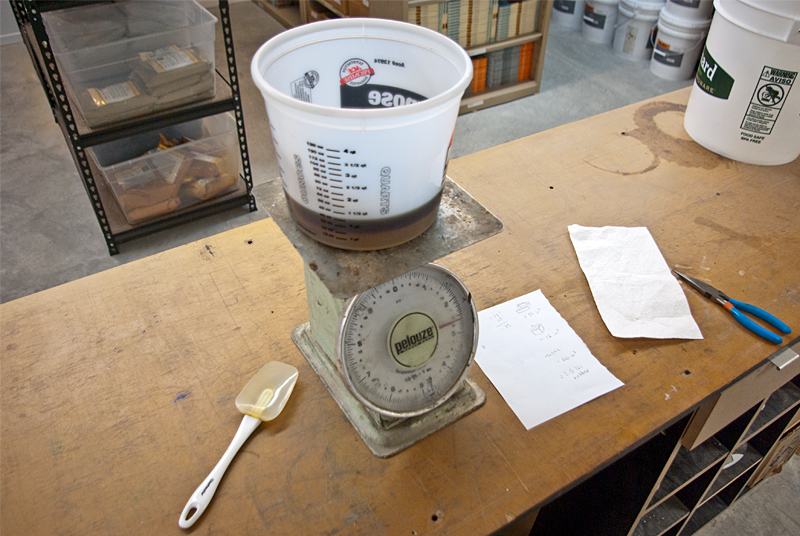
Make sure the rubber is mixed completely before pouring, or some parts won't cure, which is bad. Pour from one spot to minimize air bubbles.
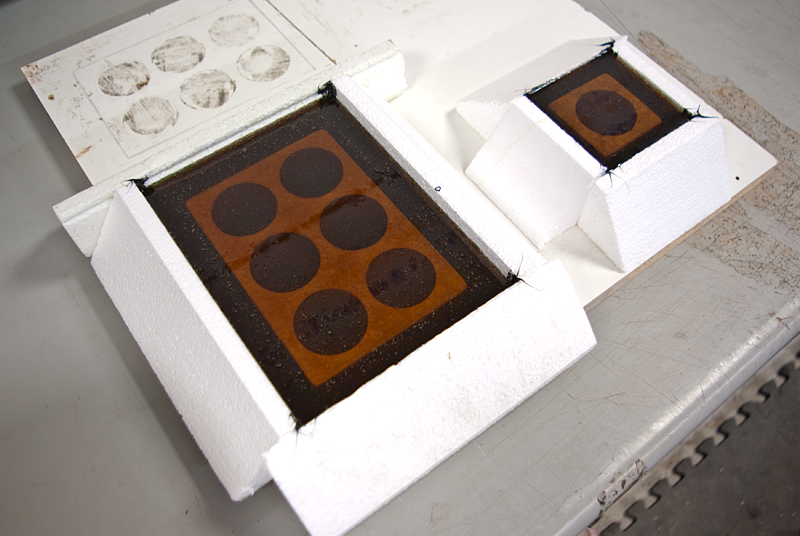
After about 12 hours the rubber has cured and can be removed from the form.

The forms are ready to use after the rubber has cured. Some decorative aggregate is placed in the bottom of the form, which will show up on the top of the finished concrete piece.
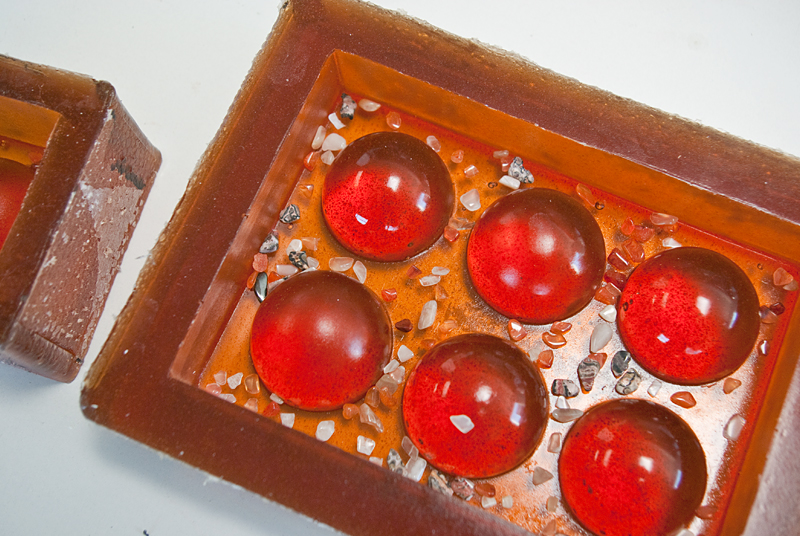
Cast the concrete. Vibration is key to removing most of the air bubbles. Decorative aggregate can be troweled into the back of the piece so it shows up on both sides after polishing.

Cover the forms with plastic to keep the humidity inside while curing. This will help minimize small surface cracks and give the best finish possible. Depending on the mix, the piece should cure from 2-4 days. If you try to remove it too soon, the edges will probably crumble.
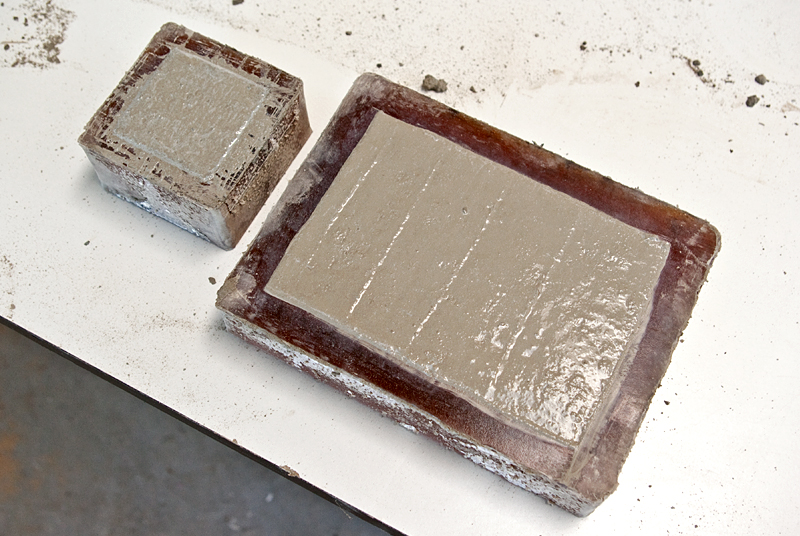
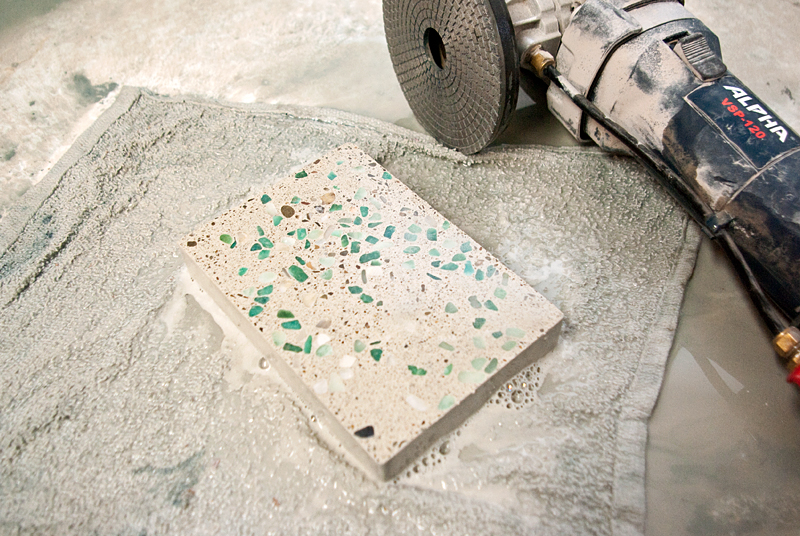
Polishing is done with a variable speed concrete polisher. It's important that the back of the piece is flat and level. Sharp edges can be rounded over with diamond hand pads.
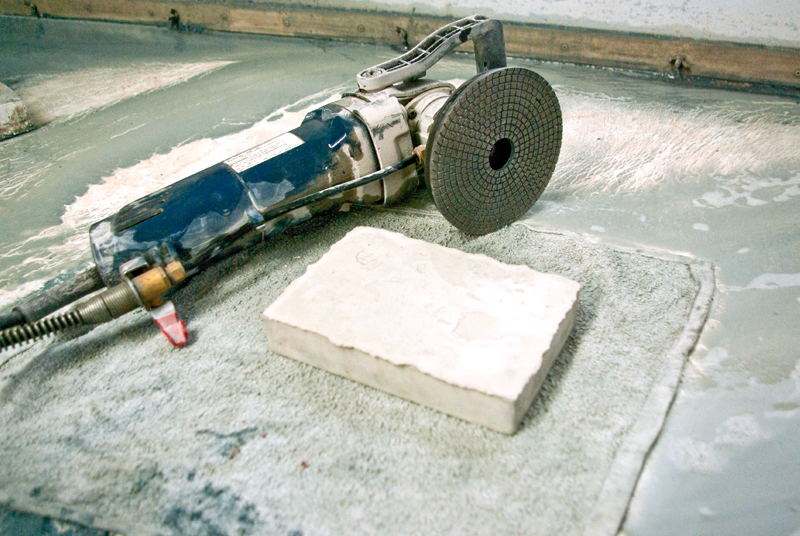
The aggregate will be exposed almost immediately. Progressing through to finer pads will create a really smooth finish and polish the piece.
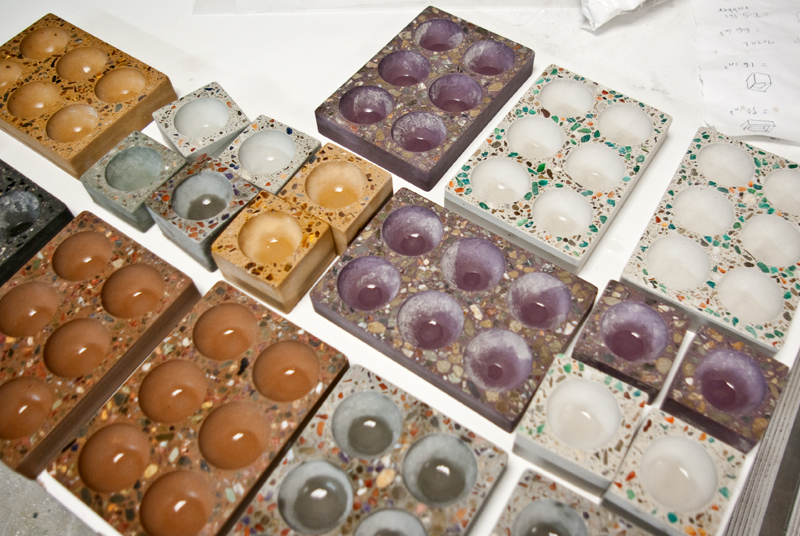
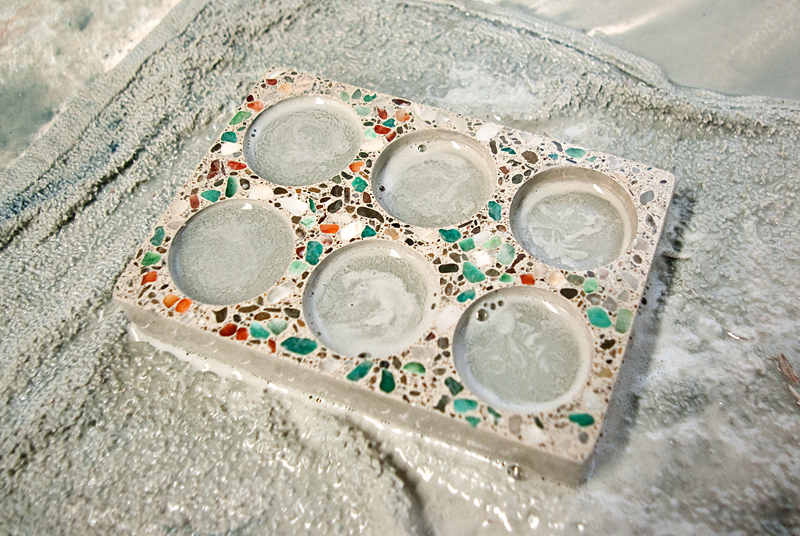
After the piece is polished, it can be sealed. Anything acidic will etch away the cement in a piece of concrete, so all of these egg holders were sealed before they were sold at the fair.
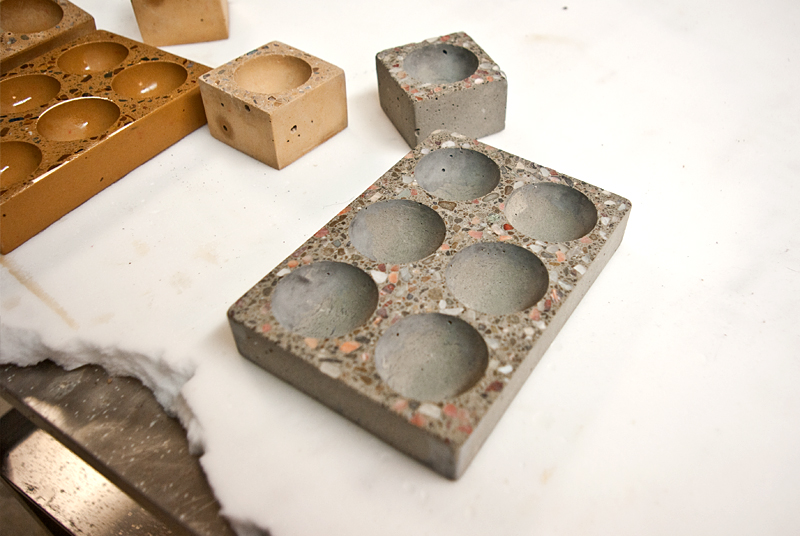
The single egg holders used the same rubber mould but were poured at two different heights.