

The first thing to address is how the hell to release a solid piece of concrete from a solid piece of plaster.
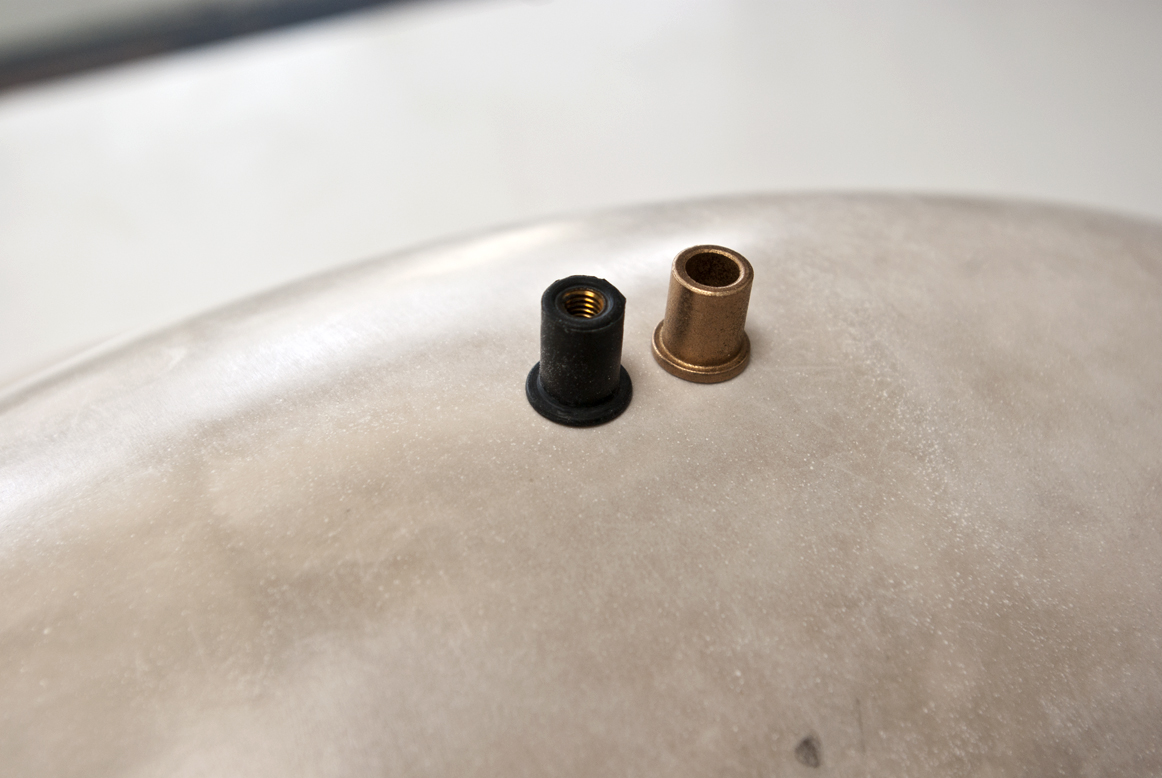
A rubber grommet is glued to the form, and it will do two things. It will create a drain hole for a brass fitting to drop into, and it will give me a place to blow air down into the form to help it release. Hopefully this works out.

This is a pre-bagged GFRC backing blend mix. It’s usually used as structural behind the face coat, not really meant to show through to the surface. It’s quite strong, so I wanted to use it on this first piece to get a feel for the strength (or weakness) of the chair.
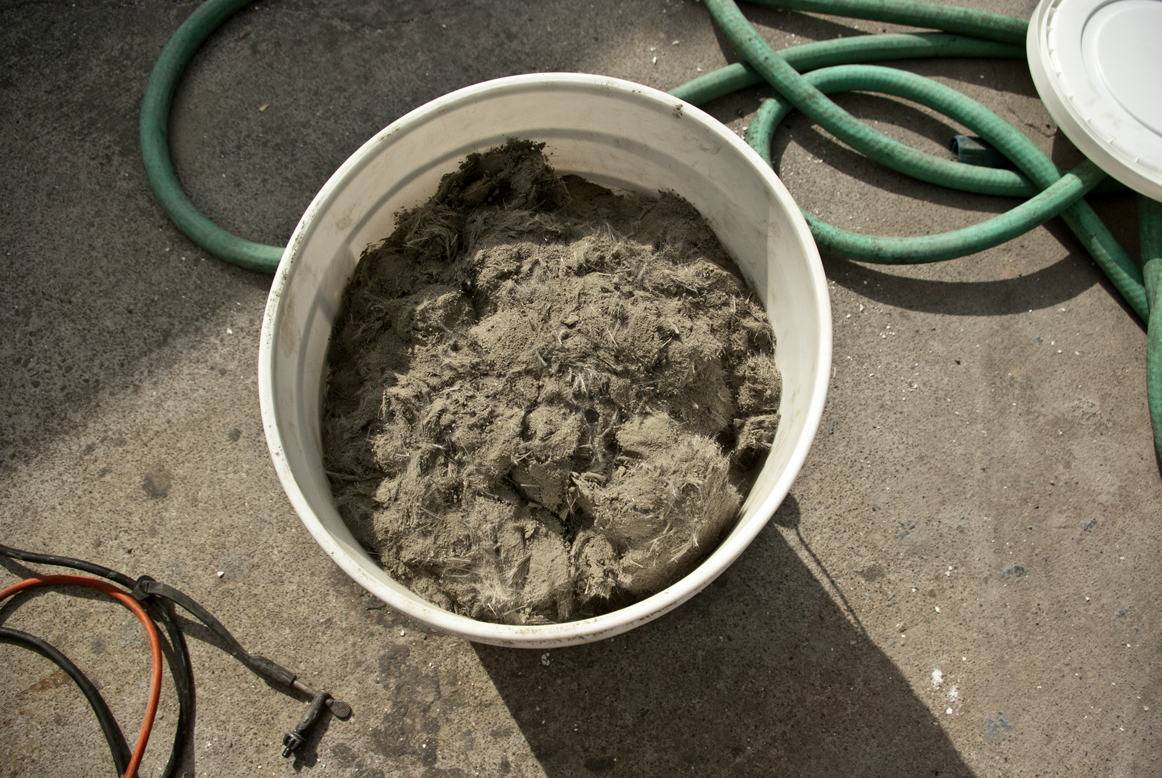

I added even more fiber to the mix. This is 2″ basalt fiber, which is UNBELIEVABLY strong. It’s really amazing stuff, developed by the soviets and only de-classified in the 80s or 90s. Somehow or another they melt basalt rock and spin it a centrifuge to create these strands. You can also get basalt rebar, which is even more radical because a 3mm rod has the strength of 3/8″ steel rebar.

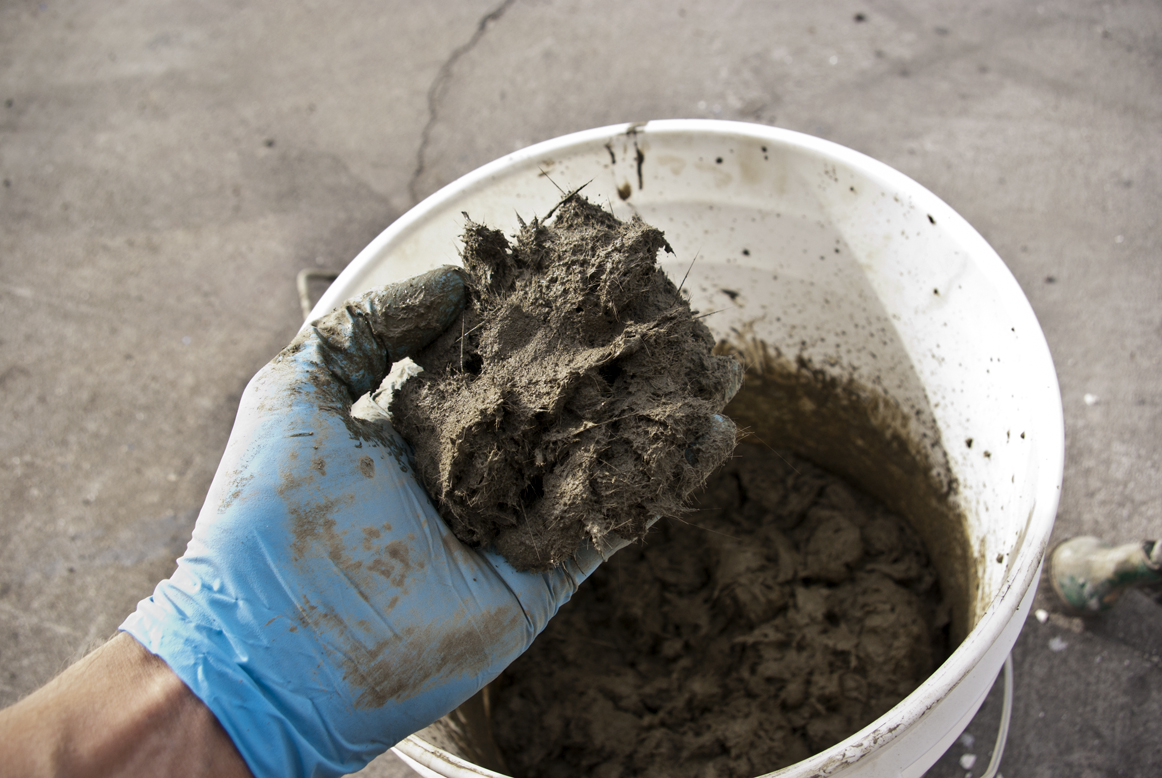
Immediately there were problems trying to lay the mix on the form. The fibers make it too thick to be pressed on like normal, and it just slid down the very smooth surface of the mold. After seeing this, I elevated one side so it was horizontal, packed it in, waited a little while, then elevated the other side to horizontal and continued packing

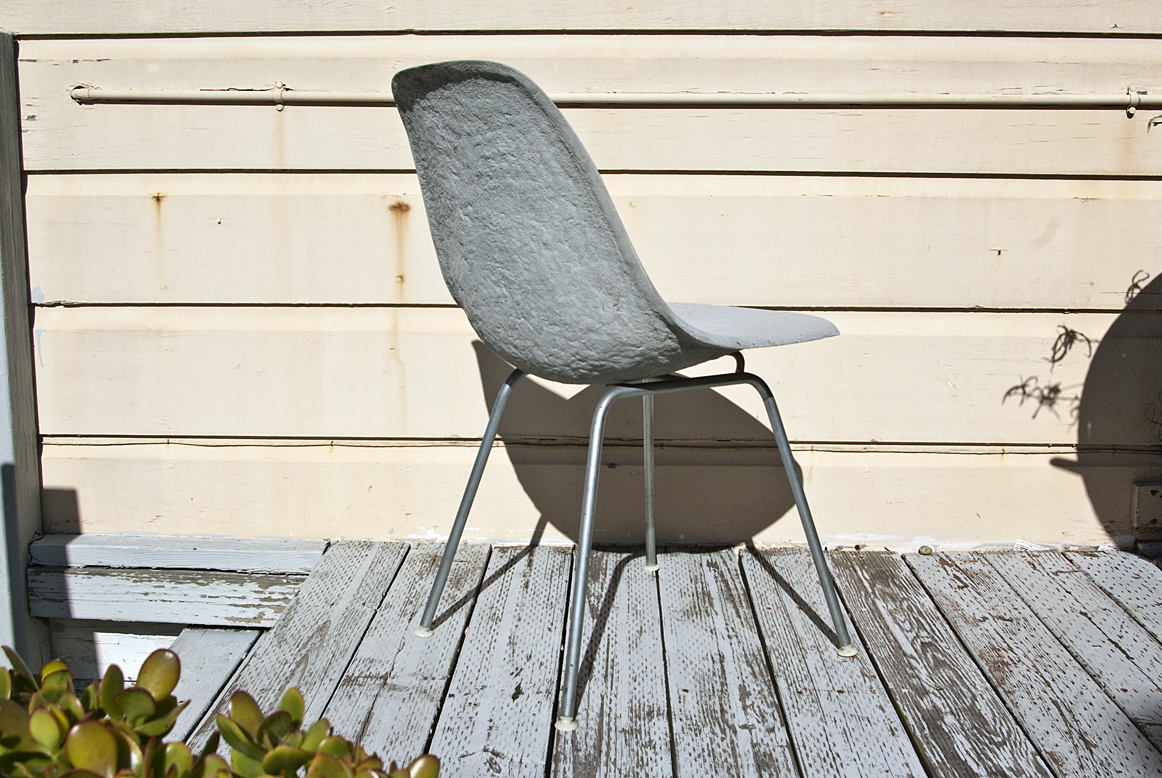
Some places are probably 1/2″ thick, others are more like 1/4″. Hopefully this difference in thickness doesn’t make the chair too weak, but I think it will. The back side is going to be very rough for now.


That wonderful curve from the thin edge of the original is gone, just a lumpy mess of concrete instead.

Cover with plastic, wait 12+ hours to cure, then begin demolding:

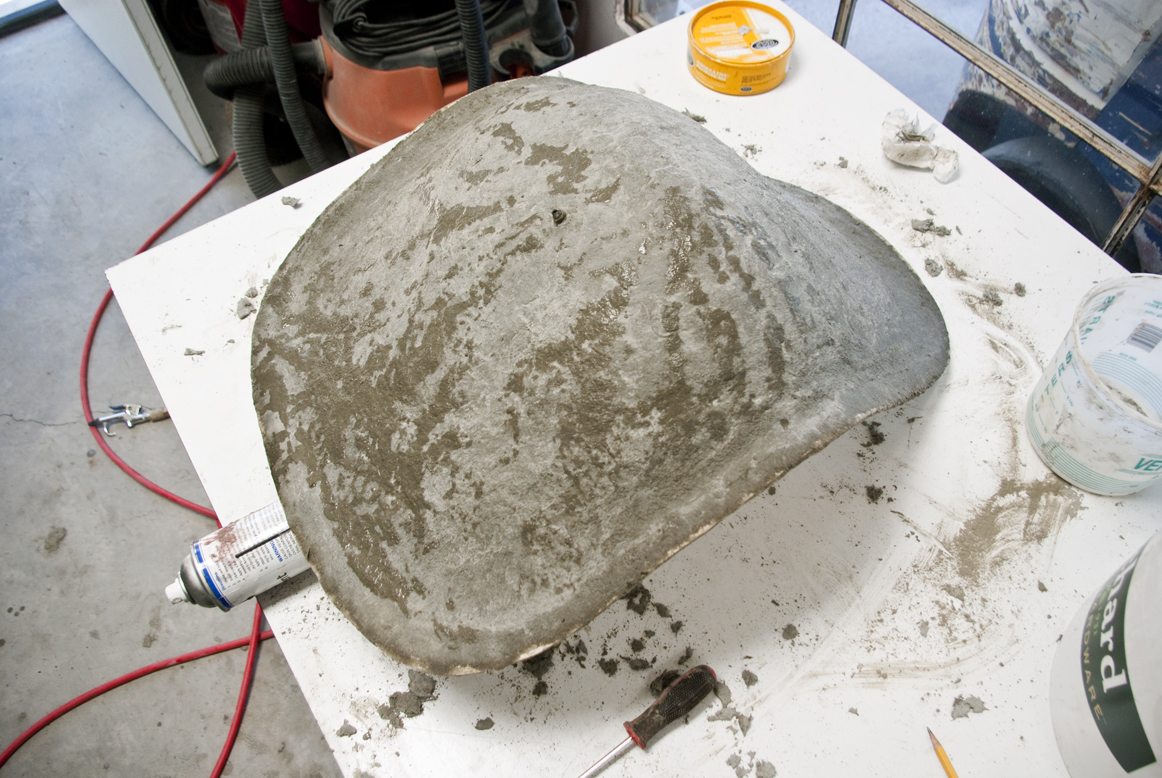


No real struggle to get the concrete out, which is great.

Most of this discoloration is from rough spots in the mold (where the fiberglass pushed through the plaster). What’s interesting is that it mimics what came off of the fiberglass chair. With some more sanding and filling to the mold, all of this will disappear.

The shell resting on a base:

Close-up of the drain hole. The rubber grommet slid down when the concrete slumped and the ring is leftover spray adhesive from where it was. Next time I’ll silicone it in place and it should stay.


For the next casting, I might try to roll the concrete out as a slab and drape it into the form. This will help keep the thickness uniform and will make the back side look nicer. I haven’t tried that technique on a form this size, but it should work.
Some rubber parts are on the way and then I’ll bolt the shell up to a base. Total weight is 15 lbs, it varies from 1/4″ to 1/2″ in places. Durability testing will be interesting.